For beneficiaries
When the time comes, be ready, not lost.
Being a beneficiary or executor is a job nobody trains for. The vault is designed so when the moment arrives, the people you trust to handle your affairs aren't searching — they're acting.
If you're here because someone has passed: we're sorry. This page is mostly written for the situation before that — for vault owners who want to set things up so beneficiaries are taken care of, and for adult children helping parents organize. If you're already in the middle of the process and need help accessing a vault, the vault recovery help page walks through every scenario plainly.
What the vault gives a beneficiary
Six supports, when you need them.
Emergency access, on your terms
When you need to act, the Emergency Kit unlocks the vault. It's been printed and stored where you can find it — that's how zero-custody works.
Documents in one place
Will, account info, insurance policies, beneficiary designations, important contacts — all organized so you know exactly what you have to work with.
Inheritance breakdown
A clear, dollar-valued summary of what was allocated to you and other named beneficiaries. No mystery, no math.
The advisor is in the loop
If the vault owner worked with a financial advisor or attorney, that person is connected here too — pinned contact card, ready to help you through the process.
A letter of instruction
Funeral wishes, document locations, personal messages, digital account notes. The things that aren't in the will but matter.
Nothing depends on us being around
The vault lives on the device, with a backup in their Drive. If our company disappears tomorrow, the vault keeps working. Your access doesn't depend on our continued existence.
The Emergency Kit
The piece of paper that lets you act.
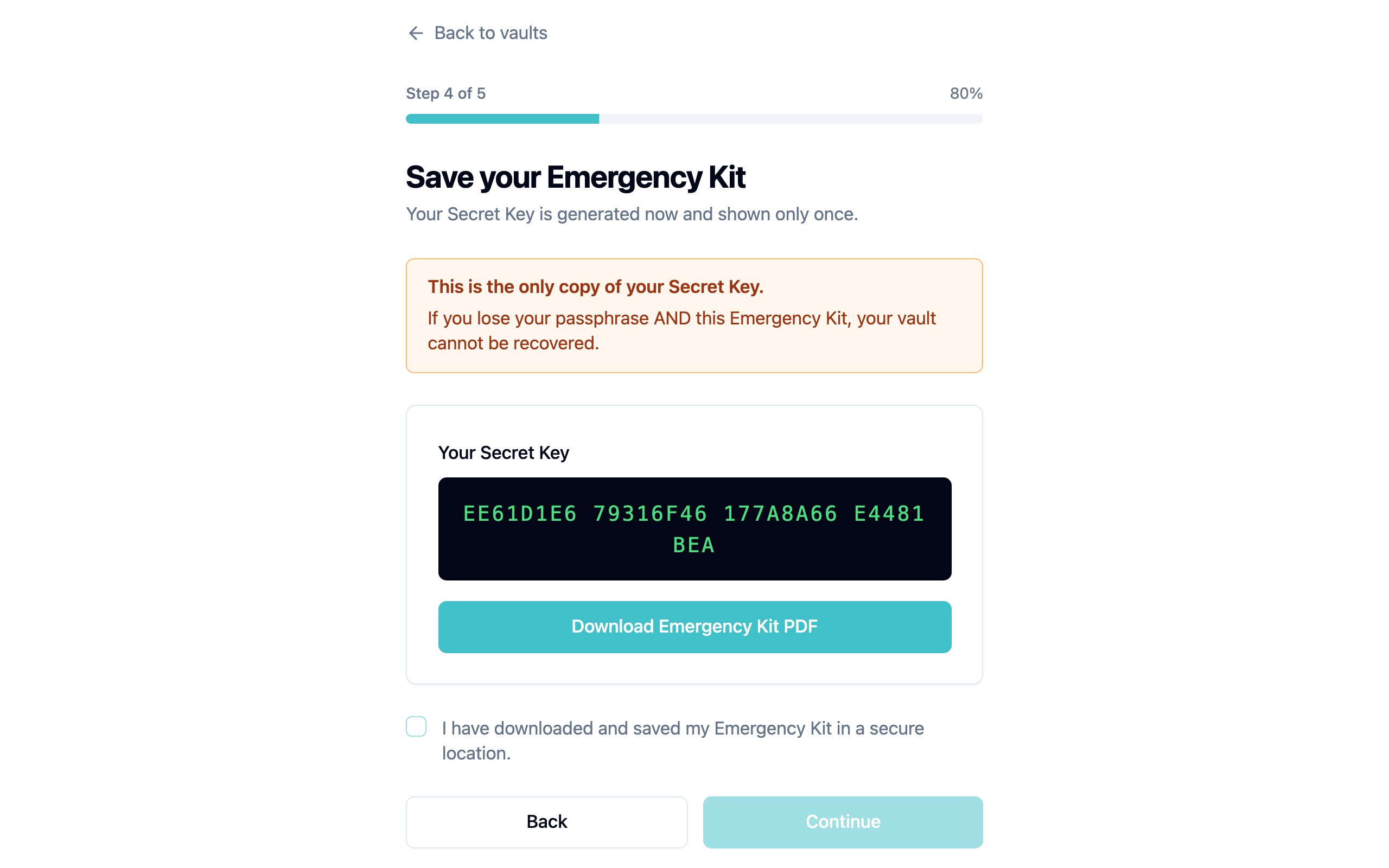
Every vault generates an Emergency Kit PDF when it's first created — a printable document containing the Secret Key needed to unlock the vault on a new device. The vault owner stores it somewhere their beneficiaries can find (a fireproof safe, attorney's office, safety deposit box).
When the time comes, you combine the Kit with the vault owner's passphrase to unlock everything. Both are needed. Neither alone is enough — that's how the encryption protects them while they're alive, and how it empowers you when it's time.
If you ever need to access the vault
Four scenarios, four answers.
This is the same matrix from the in-app vault recovery help — surfaced here so beneficiaries can read it before they ever need it.
You have the Emergency Kit + their passphrase
✅ You can unlock the vault and see everything they organized.
You have the Emergency Kit but don't know their passphrase
❌ Without the passphrase, the vault can't be opened. The passphrase is half of the encryption key — they should have stored it somewhere you can find (password manager, sealed envelope at the attorney's office).
You have their passphrase but no Emergency Kit
⚠️ You can use the passphrase on a device that already remembers the vault (their laptop, their phone). Without the Kit on a fresh device, the Secret Key is missing.
You have neither
❌ The vault is unrecoverable — by you, by us, by anyone. This is the price of the zero-custody architecture, and why parents are asked to store both factors safely.
This is by design. If we held a backdoor, anyone who compromised our servers — or filed a court order, or paid the right employee — could get to your family's data. The fact that we genuinely can't is the whole protection. The trade-off is that vault owners have to take care to leave both halves of the key somewhere accessible.
The best preparation is shared in advance.
If you've been named in someone's plan, the kindest thing they could do is give you visibility now — so the future you isn't searching. Encourage them to set up a vault and share read-only access with you.